
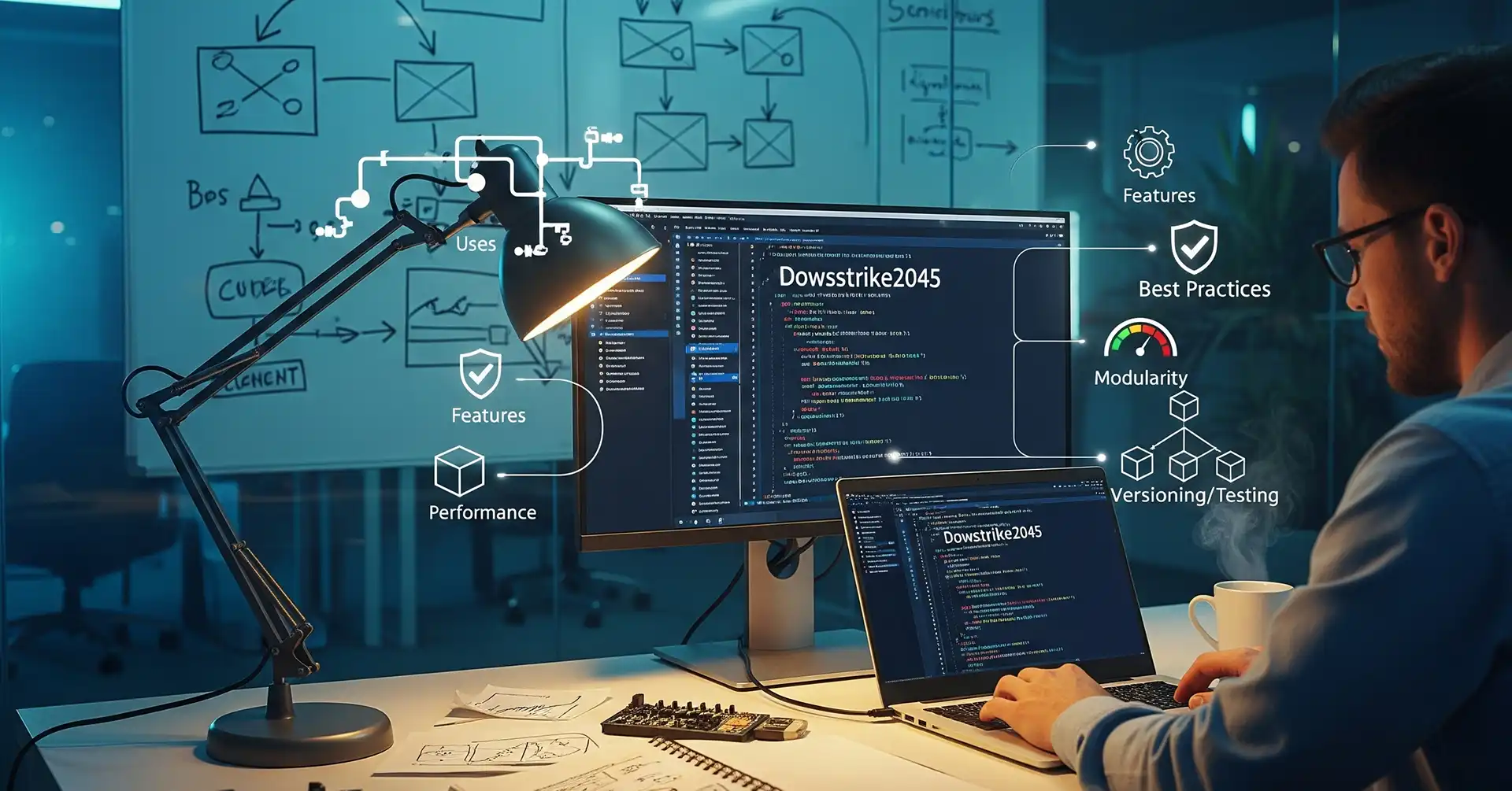
Technology evolves faster than most industries can keep up with. Every year introduces new cyber threats, smarter malware, more advanced hacking methods, and increasingly complex infrastructures. Businesses no longer rely on a single server or local machine. Today, organizations operate across cloud systems, APIs, remote work environments, AI-driven platforms, and automated workflows. As this digital ecosystem expands, traditional cybersecurity tools often struggle to keep pace. This is exactly why the idea of Dowsstrike2045 Python has started attracting so much attention among developers, ethical hackers, and automation engineers.
At first glance, Dowsstrike2045 Python may appear to be another futuristic security framework wrapped in hype. But the deeper you explore the concept, the more interesting it becomes. Unlike traditional tools that focus on one specific function, this concept revolves around creating a unified Python-driven environment capable of combining automation, vulnerability analysis, penetration testing, intelligent monitoring, and real-time defensive actions under one ecosystem.
For many developers, the idea feels incredibly realistic because Python has already become one of the most powerful languages in cybersecurity, machine learning, automation, and cloud engineering. The vision behind Dowsstrike2045 Python doesn’t feel impossible; instead, it feels like the next logical step in how modern security systems may evolve over the next two decades.
What Is Dowsstrike2045 Python?
Dowsstrike2045 Python is widely described as a conceptual cybersecurity and automation framework built around Python. According to growing online discussions, the framework aims to integrate multiple security operations into a centralized platform capable of handling everything from advanced scanning to AI-powered threat detection.
The reason the idea stands out is because most cybersecurity environments today are highly fragmented. A professional security engineer typically relies on several independent tools to complete a single operation. Network scanning may require one application, exploit testing another, monitoring software a third, and automation scripts a completely separate environment. This constant switching between platforms slows down workflows and increases operational complexity.
The vision of Dowsstrike2045 Python attempts to solve that problem by introducing a modular architecture where different security capabilities work together inside one Python ecosystem. Instead of juggling disconnected software, developers could theoretically manage entire cybersecurity operations from a single intelligent framework.
Although there is currently no verified GitHub repository, official documentation, or confirmed PyPI package for Dowsstrike2045 Python, the discussions surrounding it reveal something extremely important about the future of cybersecurity. The industry itself is moving toward unified, AI-driven, automated security systems, and Dowsstrike2045 Python symbolizes that direction perfectly.
Why Developers Are Interested in Dowsstrike2045 Python
The growing interest in Dowsstrike2045 Python is not simply because it sounds futuristic. Developers are paying attention because the concept aligns with several real industry trends already shaping modern technology.
Cybersecurity today is no longer just about firewalls and antivirus software. Organizations now require:
- Automated security operations
- Real-time infrastructure monitoring
- AI-assisted anomaly detection
- Integrated vulnerability management
- Faster penetration testing workflows
- Cloud-native security systems
Python already dominates many of these areas due to its flexibility and massive ecosystem of libraries. That’s why the idea of a unified Python-powered framework feels both practical and exciting.
Many developers who work in automation or DevOps understand how frustrating it can be to maintain multiple tools that barely communicate with each other. Dowsstrike2045 Python represents a future where those barriers disappear, creating smoother and more intelligent workflows.
Core Features That Make Dowsstrike2045 Python Unique
One reason Dowsstrike2045 Python has generated significant attention is because of the ambitious features associated with the framework. While many of these capabilities remain theoretical, they paint a clear picture of what future cybersecurity platforms may eventually look like.
Advanced Network Intelligence
Modern infrastructures are extremely complex, often consisting of thousands of connected devices, APIs, servers, and cloud services. Dowsstrike2045 Python is believed to include advanced scanning capabilities capable of identifying active systems, open ports, running services, and possible vulnerabilities in real time.
Unlike older network scanners that focus purely on discovery, this concept introduces the idea of intelligent analysis combined with automation. Instead of simply identifying open ports, the framework could theoretically evaluate associated risks automatically.
Vulnerability Assessment and Exploit Detection
One of the strongest aspects associated with Dowsstrike2045 Python is its proposed vulnerability engine. The framework is described as being capable of cross-referencing discovered weaknesses with exploit databases and known attack patterns.
This matters because traditional vulnerability management often requires multiple separate stages:
| Traditional Workflow | Unified Dowsstrike2045 Python Vision |
| Scan infrastructure | Intelligent automated scanning |
| Export findings manually | Built-in integrated reporting |
| Compare with databases | Automated vulnerability mapping |
| Run separate testing tools | Unified exploit validation |
| Create reports manually | AI-assisted reporting |
The ability to streamline these stages inside one environment could save security teams enormous amounts of time.
AI-Powered Monitoring Systems
Perhaps the most futuristic part of Dowsstrike2045 Python is the integration of artificial intelligence into real-time security monitoring. Cybersecurity teams today face an overwhelming amount of alerts every day. Many organizations struggle to separate real threats from false positives.
The concept behind Dowsstrike2045 Python suggests systems capable of learning normal behavior patterns and identifying anomalies instantly. Instead of waiting for manual human analysis, the framework could potentially react automatically by isolating systems, blocking traffic, or triggering defensive workflows.
This shift from reactive security to predictive and automated defense represents one of the biggest trends in modern cybersecurity.
Architecture of Dowsstrike2045 Python
The architecture discussed around Dowsstrike2045 Python is one of the reasons many developers find the concept believable. Rather than appearing chaotic or unrealistic, the framework is usually described using a layered and modular design model commonly seen in enterprise-level systems.
Core Engine Layer
The core engine would theoretically manage all internal operations including task execution, communication between modules, resource handling, and automation orchestration. This engine would act as the brain of the framework, ensuring every module operates efficiently together.
Integration Layer
The integration layer is especially important because modern security environments depend heavily on interoperability. According to community discussions, Dowsstrike2045 Python could potentially integrate with tools such as:
- Wireshark
- Metasploit
- Cloud APIs
- SIEM platforms
- Automation pipelines
This integration-focused approach transforms the framework from a standalone application into a centralized cybersecurity ecosystem.
Interface Layer
The interface layer could provide both command-line and graphical environments. Advanced users may prefer Python scripting and terminal operations, while enterprise users may rely on dashboards and visual reporting systems.
This dual accessibility could make Dowsstrike2045 Python appealing to both developers and larger organizations.
Why Python Is the Perfect Foundation
The success of the Dowsstrike2045 Python concept heavily depends on Python itself. Python has already become one of the most influential programming languages in cybersecurity due to its balance between simplicity and power.
Python is widely used for:
- Ethical hacking
- Automation scripting
- AI development
- Cloud engineering
- Data analysis
- Security research
Its enormous library ecosystem makes it ideal for building modular platforms.
Real-World Applications of Dowsstrike2045 Python
Even though Dowsstrike2045 Python remains conceptual, its potential applications are very realistic.
Penetration Testing
Ethical hackers could potentially automate entire penetration testing engagements inside one environment. Instead of relying on disconnected software stacks, professionals could script entire attack simulations from reconnaissance to reporting.
This level of workflow integration would dramatically increase efficiency.
DevOps Security Automation
Modern DevOps environments prioritize speed, but rapid deployment often creates security gaps. Dowsstrike2045 Python could theoretically integrate directly into CI/CD pipelines, automatically scanning applications before deployment and identifying vulnerabilities earlier in development cycles.
This aligns closely with modern DevSecOps principles.
Self-Healing Infrastructure
One of the most advanced concepts connected to Dowsstrike2045 Python is self-healing infrastructure. In theory, systems could automatically identify unusual behavior, isolate compromised nodes, restart services, and apply defensive policies without human intervention.
This represents the future of intelligent infrastructure management.
Comparison With Existing Security Tools
To better understand the vision behind Dowsstrike2045 Python, comparing it with existing platforms helps provide context.
| Feature | Dowsstrike2045 Python | Nmap | Metasploit |
| Primary Language | Python | C++ | Ruby |
| Main Focus | Unified Security Ecosystem | Network Discovery | Exploitation |
| Automation Level | High | Moderate | Moderate |
| AI Integration | Theoretical | No | Limited |
| Real-Time Monitoring | Yes | No | Partial |
| Workflow Integration | Extensive | Limited | Limited |
| Scalability | High | Moderate | Moderate |
This comparison highlights why Dowsstrike2045 Python feels so ambitious. Its vision goes far beyond individual tools and instead focuses on ecosystem-level integration.
Challenges and Limitations
Despite the excitement, several major limitations surround Dowsstrike2045 Python.
The biggest issue is the absence of verified sources. Without official documentation or repositories, there is currently no reliable way to confirm the legitimacy of the framework. This creates security risks because unofficial downloads may contain malicious code disguised as legitimate software.
Additionally, even if such a framework becomes real, it would likely involve a steep learning curve. Advanced cybersecurity platforms require strong knowledge of networking, Linux systems, Python scripting, and infrastructure security.
Still, these limitations do not reduce the importance of the concept itself.
Why Dowsstrike2045 Python Matters for the Future
The true significance of Dowsstrike2045 Python lies in what it represents rather than what currently exists. The concept reflects the future direction of cybersecurity technology itself.
The industry is clearly moving toward:
- Intelligent automation
- Unified security ecosystems
- AI-assisted defense
- Real-time infrastructure monitoring
- Integrated DevSecOps pipelines
- Predictive threat management
Dowsstrike2045 Python combines all these ideas into one vision. Whether the framework eventually becomes a real product or remains a conceptual blueprint, it already highlights where the cybersecurity world is heading.
Final Thoughts
Dowsstrike2045 Python stands as more than just another trending keyword in the tech community. It represents a broader transformation happening across cybersecurity, automation, and intelligent infrastructure management. The framework’s conceptual design challenges traditional fragmented workflows and introduces the possibility of a unified, Python-driven ecosystem capable of combining security operations, automation, AI monitoring, and vulnerability management into one intelligent platform.
Even though no official version currently exists, the discussions surrounding Dowsstrike2045 Python reveal the growing demand for smarter and more connected security systems. Developers, ethical hackers, and DevOps engineers are no longer satisfied with disconnected tools and manual workflows. They are searching for platforms that can think faster, automate better, and adapt in real time.
That’s why Dowsstrike2045 Python continues attracting attention. It doesn’t simply describe a tool; it describes the future direction of cybersecurity itself.
Also Raed About :- Analyzingmarket com: Most